All posts by etanafon

Magic and Mystery

When I was growing up, my mom had a couple of bookcases full of mysteries in the hall upstairs, outside my room. Although I walked by those bookcases every day, I was never remotely interested in their contents, my young mind being almost completely consumed with fantasy and science fiction.

As you get older, you learn that some things change and some things don’t. This rather stale crumb of wisdom means, in my case, that I still read (and write) fantasy. Science fiction, not so much. On the other hand, these days I often read mysteries–generally those belonging to the ‘cozy’ category and more specifically, ‘Golden Age’ mysteries, which were written from the 1930s through the 1950s. Most of them are English–Dorothy Sayers, Edmund Crispin, et al–though there were also some notable American authors like John Dickson Carr and Elizabeth Daly.

Am I just hopelessly schizophrenic, or is there a common thread here? (Well, yes, both could be true, but let’s put that aside for the moment.)

Note that I’m not really talking about mixed genres. An element of mystery is found in many stories of different types. For example, Dickens’ Bleak House and Dostoyevsky’s The Brothers Karamazov are, among other things, murder mysteries. On a lowlier and more personal note, my two published books include mysteries of a sort–in The Road to Hel, who is the traitor? And in Robin Hood: Wolf’s Head, who is the narrator, and what made his friend the hermit renounce the world?

But here, I’m comparing ‘pure’ fantasies and mysteries, fantasy first. What makes a fantasy story? It might have dragons, or not. It could be full of elves, or infested with vampires. It could take place almost anywhere and the plot could be whatever you like. I’d argue that at bottom, it’s the presence of working magic that defines fantasy. That’s what removes fantasy from the realm of the mundane, from Lord Dunsany’s ‘the fields we know.’

It seems to me now mysteries also contain a sort of magic. The murder itself is something that (we hope) distances the mystery story from the everyday realm. It must be, of course, a puzzling and well plotted murder, not the result of some random mugging. It must be a murder that is itself a sort of magical attack, the evil ‘magician’ using this means to impose his or her will on the world. This evil ‘magic’ must be opposed by the sleuth, who possesses amazing mental powers that at least seem magical to the onlooker, though everything may be explained at the end. These powers allow the sleuth (who is often an unlikely or overlooked person, like the humble heroes of many fantasy stories) to solve the puzzle and right the balance of the world again.

That said, I’d like to see more tales that are fully both fantasies and mysteries. The only example I can bring to mind is Randall Garrett’s Lord Darcy series. Can anyone tell me of any other works like that out there in the story multiverse?

Executions and Beer Money

In R.A. Lafferty’s great science fantasy novel, ‘Annals of Klepsis’, the protagonist is visiting a strange planet while posing as a well-known historian. The planet’s ruler advises him that he had better do or say something distinguished every few minutes, or risk being executed immediately.

Luckily, authors face a lesser challenge. Our problem is that posed by Robert Heinlein: we’re competing for Joe’s (or Josephine’s) beer money. If a potential reader decides that a six-pack has more entertainment value than the author’s latest and greatest, the author will–figuratively, at least–go hungry.

Starving in a garret is still a lot better than execution, of course. But as A.E. Houseman famously observed, ‘Ale does more than Milton can / To justify God’s ways to man.’ In other worlds, beer is a really tough competitor. Still, I’d point out that books–some of them, anyway–are capable of giving the reader a lasting glow without the punishment of a hangover.

And with the rise of the e-book, things are looking up for poor starving authors. Now a reader can grab an entertaining book for, in many cases, less than the price of a single bottle (especially if you’re talking craft beer).

Let’s hope brewers don’t up the ante by developing some kind of e-beer. That would be just wrong.

Artificial Worlds

I just picked up the first book of an epic fantasy trilogy. It wouldn’t be fair to mention the title or author, since I may not even finish the book. The writing is good, yet I have to push myself to read it. In fact, since my younger days when I read and re-read series like Lord of the Rings, Thomas Covenant, Fafhrd and the Gray Mouser, and even (shudder) Gormenghast, I’ve been drawn less to epic or ‘high’ fantasy, and the other day it occurred to me to wonder why.

I still love fantasy that incorporates actual history–such as Tim Power’s The Anubis Gates, and Susanna Clarke’s Jonathan Strange and Mr. Norrell, for example. What I’m realizing is that I don’t care as much for stories dealing with worlds that have been artificially constructed, however creative the author. I would rather read a novel that touches on the Bourbons or the Plantagenets, instead of aristocratic intrigues in the decadent culture of the Shazooreth city-states. I would rather learn something about Brazilian culture (for instance) than sort out the strange beasts and stranger geography of the world of Otayaba.

At the same time, there are still non-historical, non-urban fantasy (rural fantasy?) series that I like–for example Patricia Wrede’s Enchanted Forest books. Dragons, wizards, castles and talking animals abound in such stories, so what’s the difference? I pondered this awhile and decided that stories like Wrede’s are also set in a world we know, and have known and told stories about for thousands of years: the realm of Faerie. And yes, I think that it is, like this world, a real place–of which Tolkien said, “…it holds the seas, the sun, the moon, the sky; and the earth, and all things that are in it: tree and bird, water and stone, wine and bread, and ourselves, mortal men, when we are enchanted.”

This doesn’t mean storytellers can’t discover new parts of Faerie. But when they do, I don’t expect them to come with meticulously plotted maps and libraries full of historical scrolls relating wars and dynasties. (Tolkien’s work might seem like an exception to this, but of course Middle-Earth in Lord of the Rings is not Faerie: it’s our own world, Midgard, in the far past.)

So I guess I’m basically a traditionalist, sticking in the timeless mud of Elfland and Earth. Maybe I should give a fancy name to this principle, like ‘Tolkien’s Razor’: No need to build a new world when we have two such magical realms from which to choose.

A Very ‘Strange’ Review

As a way of avoiding having to come up with a new, creative blog entry today, I’m re-posting my recent review of ‘Jonathan Strange and Mr. Norrell’ on Goodreads here. I tried to match the book’s style (complete with footnotes). There are mild spoilers here, but it’s really people who are already familiar with the book who will (hopefully) appreciate it the most. In my case, I was listening to the audiobook version, which kept me entertained through many days of commuting (26 discs!)
*******************************************
Miss Clarke has achieved something truly remarkable with her novel, which relates the circumstances surrounding the recent wars on the Continent and the return of magic to England. Inevitably, we find ourselves in agreement with those reviewers who have likened her work to that of Miss Austen. Nor can we deny the possibility of influence from Mr. Dickens as regards the darker or more humourous elements of the story; notwithstanding the trifling circumstance that he has yet to publish and in fact, only recently succeeded in being born.[1]

In any case, Miss Clarke has rendered a unique service to the friends of English magic. Her work contains many insights and anecdotes that fail to appear even in the pages of Mr. Segundus’ excellent biography of Mr. Strange[2]. Likewise, she illuminates Mr. Norrell’s life and character to a surprising degree, presenting many scenes where only the great man and his closest advisors play a part. She even provides an explanation, fantastic though it may seem, for the strange disappearance of Sir Walter and Lady Pole’s most trusted servant, Stephen Black.

The seeming omniscience of Miss Clarke’s narration has given rise to various speculations. Some opine that she was a frequent participant in the dances at Lost Hope and obtained much of her information there, while others suggest that she was actually a confidant of the two magicians from the beginning, and is suppressing her own part in the narrative out of natural modesty.

It seems unlikely, however, that she has actually met either gentleman, inasmuch as Mr. Strange is bound by various promises to his wife regarding the fairer sex[3], and Mr. Norrell is well known for his aversion to female society. As for the Lost Hope conjecture, there is no evidence that Miss Clarke’s family tree includes any ancestors from Faerie. Nor does she exhibit the demeanour of one who is under enchantment. Those stolen away by fairies do not, as a rule, have sufficient leisure time for writing a novel, much less the inclination to do so.

The likeliest explanation, then, is that Miss Clarke is herself a magician. This accounts for her wide knowledge of spells and the lore of the Raven King, as well as her story’s manifest powers of enchantment. But regardless of where the truth lies, it is our decided opinion that discerning readers will find a visit to Miss Clarke’s magical world both diverting and improving.

Footnotes

1. We are reliably assured by Mr. Vinculus that Mr. Dickens’ first novel will appear in 1836.
2. We refer, of course, to ‘The Life of Jonathan Strange’, John Murray, London, 1820.
3. Among other things, Mr. Strange has undertaken to avoid contact with any young lady who has been, is now, or has ever considered sojourning in Venice or indeed, any other city in Italy.
Post-giveaway price discounts

My Hel-ish giveaway on Goodreads ended Sunday night, and over 800 people requested a copy–an amazing response (at least to me). Thanks to everyone who entered, and congratulations to the winners!

To celebrate, I’ve discounted the print version of ‘The Road to Hel’ –it’s now $9.99 on Amazon, down from $13.70. If you don’t get free shipping with Amazon, it might make sense to get it for 8.99 by going to Createspace and using coupon code NDDFF7WW. (Catchy, isn’t it? You’ll notice if you read it backwards it becomes…well, never mind.)

The Kindle version is still only $2.99, and there are comparable deals in the UK store.

I’m also offering similar deals on  ‘Robin Hood: Wolf’s Head’. The print version is down to $11.99, and with coupon code NDDFF7WW you can get it for 10.99 at my Createspace e-store.In Kindle format, it’s just 2.99.


March coming in like…

Well, more like a lamb, at the moment. Things seem very springlike and it makes me think about the call of the greenwood (i.e. a Robin Hood sequel). That won’t happen for a bit because of other projects.

But in the meantime, I’m running a price promotion on the Kindle edition of Robin Hood: Wolf’s head in the Amazon US and UK stores! It goes from March 2nd  to March 9th.

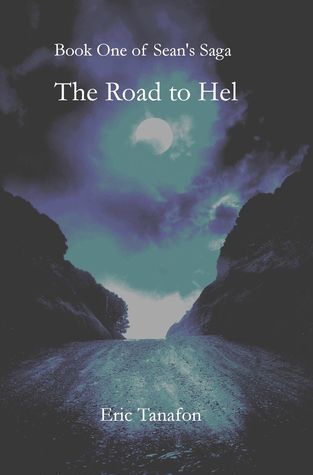
‘The Road to Hel’ coming in February

I’ll let the narrator, Sean Cornwell, introduce the story in his own words:

“Sean here. When wolf-riding trolls attack our house, my sister Fiona and I find out the hard way that we’re destined to be heroes. That goes for our friends Arturo and Parvati, too. Next thing we know, we’re all enrolled in the last hero school on Midgard (that’s hero speak for ‘Earth’). In fact, we’re the entire final freshman class.

“It’s not all bad. We get to go to school on an enchanted island. The girls get to ride flying horses, Arturo gets to go berserk, and I get to learn more about swordfighting than I ever wanted to know. We also get our own personal bard who sings our praises in deathless…well, verse that you wish would die, but it won’t.

“You’d think we’d also get to save the world. But as it turns out, there are about a million prophecies guaranteeing that Ragnarok is right around the corner and the world is literally toast, so all we get to do is die (heroically, of course).

“In the meantime, our mom winds up in Hel while trying to rescue our dad from, believe it or not, an even worse place. And for some reason even Odin won’t explain, we’re the only ones who can bring them back.

“Well, that takes care of summer vacation. I can’t wait for the school year to start!”